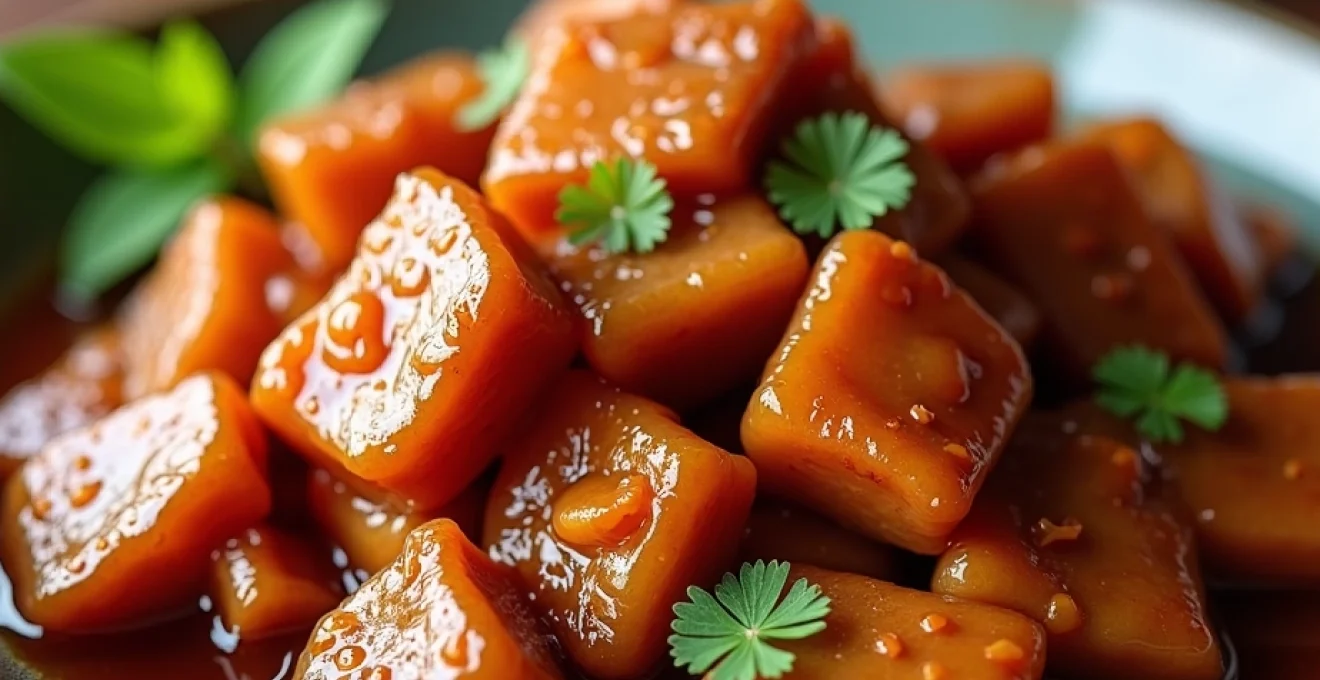
Caramel pork is a beloved dish that tantalises taste buds across Southeast Asia with its perfect harmony of sweet, salty, and savoury flavours. This culinary masterpiece showcases the art of balancing contrasting tastes and textures, resulting in a dish that is both comforting and exciting. Mastering the intricacies of caramel pork requires a deep understanding of ingredients, cooking techniques, and cultural nuances that have been refined over generations.
At its core, caramel pork is a testament to the transformative power of heat and sugar on meat. The caramelisation process not only imparts a rich, complex flavour but also creates a glossy exterior that is visually appealing. Achieving the perfect balance of sweetness and umami, while maintaining the desired texture, is a culinary challenge that rewards those who master it with a truly unforgettable dish.
Chemistry of caramelization in pork dishes
The magic of caramel pork lies in the intricate chemical reactions that occur during cooking. Caramelisation is a non-enzymatic browning reaction that happens when sugars are heated to temperatures above 300°F (149°C). As the sugar molecules break down, they form new compounds that contribute to the complex flavours and aromas associated with caramel.
In the context of pork dishes, caramelisation works in tandem with the Maillard reaction, which occurs between amino acids and reducing sugars. This combination of reactions is responsible for the development of the rich, brown colour and the deep, savoury flavours that characterise well-executed caramel pork.
The type of sugar used in the caramel sauce plays a crucial role in the final flavour profile. Different sugars caramelise at varying temperatures and produce distinct flavour compounds. For instance, sucrose (table sugar) caramelises at a higher temperature than fructose, resulting in a different set of flavour molecules.
Understanding the science behind caramelisation allows chefs to manipulate the process to achieve desired flavour profiles and textures in caramel pork dishes.
Moreover, the interaction between the caramelised sugars and the proteins in the pork creates a complex matrix of flavours. As the pork cooks in the caramel sauce, it undergoes its own set of chemical changes, with proteins denaturing and fats rendering. This interplay of reactions contributes to the development of the dish’s signature taste and texture.
Selecting and preparing pork for caramel coating
The foundation of any great caramel pork dish lies in the selection and preparation of the meat. Choosing the right cut of pork and preparing it properly are crucial steps that can make or break the final result. Let’s delve into the specifics of pork selection and preparation techniques that will set you up for success.
Optimal pork cuts: belly vs shoulder for caramel dishes
When it comes to caramel pork, two cuts stand out as prime candidates: pork belly and pork shoulder. Each cut offers unique characteristics that can enhance the dish in different ways:
- Pork Belly: Rich in fat, pork belly provides a luxurious mouthfeel and intense flavour. The alternating layers of fat and meat create a textural contrast that can be truly indulgent when caramelised.
- Pork Shoulder: Also known as pork butt, this cut is well-marbled and becomes tender when slow-cooked. It’s an excellent choice for those who prefer a meatier texture with a good balance of lean meat and fat.
The choice between these cuts often comes down to personal preference and regional variations. Some recipes specifically call for one or the other, but experimenting with both can lead to delightful results.
Marinating techniques: enhancing pork flavour absorption
Marinating is a crucial step in preparing pork for caramelisation. A well-crafted marinade not only infuses the meat with flavour but also helps to tenderise it. For caramel pork, a marinade typically includes elements that complement the sweet and savoury profile of the final dish.
Key components of an effective marinade for caramel pork include:
- Soy sauce: Provides saltiness and umami
- Fish sauce: Adds depth and complexity
- Garlic and ginger: Offer aromatic notes
- Brown sugar: Introduces sweetness and aids in caramelisation
- Rice wine or vinegar: Balances flavours and tenderises the meat
For optimal flavour absorption, marinate the pork for at least 2 hours, or preferably overnight in the refrigerator. This allows the flavours to penetrate deep into the meat, ensuring a more uniform taste throughout the dish.
Pre-cooking methods: braising vs searing for texture control
The pre-cooking method you choose can significantly impact the final texture of your caramel pork. Two popular techniques are braising and searing, each offering distinct advantages:
Braising involves cooking the pork slowly in liquid, which results in tender, melt-in-your-mouth meat. This method is ideal for tougher cuts like pork shoulder, as it breaks down connective tissues over time. To braise for caramel pork:
- Brown the pork pieces in a hot pan to develop flavour
- Add liquid (often a mixture of water, soy sauce, and aromatics)
- Simmer gently for 1-2 hours until the meat is tender
- Finish by reducing the liquid to create a caramel glaze
Searing , on the other hand, creates a crisp exterior while maintaining a juicier interior. This method works well for fattier cuts like pork belly. To sear for caramel pork:
- Pat the pork dry and season well
- Sear in a very hot pan until golden brown on all sides
- Add the caramel sauce and simmer briefly to coat the meat
- Finish under a broiler for extra caramelisation if desired
The choice between braising and searing depends on the desired texture and the specific cut of pork being used. Experimenting with both methods can help you find the perfect technique for your preferred style of caramel pork.
Mastering the caramel sauce consistency
The heart of any caramel pork dish lies in its sauce. Achieving the perfect consistency is a delicate balance that requires attention to detail and an understanding of how different ingredients interact. Let’s explore the key factors that contribute to a well-crafted caramel sauce for pork.
Sugar types: impact of muscovado vs palm sugar on flavour profile
The type of sugar used in your caramel sauce can dramatically alter the flavour profile of the dish. Two popular choices for caramel pork are muscovado sugar and palm sugar, each bringing its own unique characteristics:
Muscovado sugar is a dark, unrefined sugar with a strong molasses flavour. It lends a deep, complex sweetness to caramel pork and contributes to a rich, dark colour. The molasses content also adds subtle bitter notes that can balance the overall sweetness of the dish.
Palm sugar , derived from palm trees, has a more delicate, caramel-like flavour with floral undertones. It’s less sweet than muscovado and imparts a lighter colour to the sauce. Palm sugar is often used in Southeast Asian cuisines and can give caramel pork a more authentic regional taste.
The choice between muscovado and palm sugar can significantly influence the final flavour of your caramel pork, allowing you to tailor the dish to your preferences or regional authenticity.
Caramel viscosity: achieving the perfect coating thickness
The viscosity of your caramel sauce is crucial for achieving the perfect coating on the pork. A sauce that’s too thin will run off the meat, while one that’s too thick can become cloying and overwhelm the dish. The key to perfect viscosity lies in understanding the stages of caramel and how to control them:
- Thread stage (230-235°F): Sugar syrup forms thin threads when dropped from a spoon
- Soft ball stage (235-240°F): Sugar syrup forms a soft, pliable ball when dropped in cold water
- Firm ball stage (245-250°F): Sugar syrup forms a firm ball that holds its shape out of water
- Hard ball stage (250-265°F): Sugar syrup forms a hard, compact ball
For caramel pork, you typically want to aim for the soft ball to firm ball stage. This provides a sauce that’s thick enough to cling to the meat but not so thick that it becomes candy-like. Factors such as humidity and the addition of other liquids (like soy sauce or vinegar) can affect the final consistency, so it’s important to adjust accordingly.
Balancing acidity: incorporating fish sauce and rice vinegar
The interplay of sweetness and acidity is what gives caramel pork its complex flavour profile. Fish sauce and rice vinegar are two key ingredients that provide this balance:
Fish sauce adds a salty, umami depth that complements the sweetness of the caramel. It also contributes to the overall savouriness of the dish. When using fish sauce, start with small amounts and adjust to taste, as its flavour can be quite potent.
Rice vinegar brings a subtle acidity that cuts through the richness of the pork and caramel. It helps to brighten the flavours and prevent the dish from becoming too sweet or heavy. The mild flavour of rice vinegar is preferable to stronger vinegars that might overpower the other ingredients.
To achieve the perfect balance:
- Start with a ratio of 1 part fish sauce to 2 parts sugar
- Add rice vinegar gradually, tasting as you go
- Adjust the sweetness with additional sugar if needed
- Allow the flavours to meld over low heat before making final adjustments
Remember that the goal is to create a harmonious blend where no single flavour dominates. The caramel should enhance the pork without overwhelming it, while the fish sauce and vinegar provide depth and balance.
Texture optimization in caramel pork
Texture plays a crucial role in the enjoyment of caramel pork, providing a sensory experience that complements the rich flavours of the dish. Achieving the ideal texture requires careful consideration of cooking techniques and timing. Let’s explore how to optimise texture in caramel pork to create a truly memorable dish.
The goal is to strike a balance between tenderness and bite. The pork should be soft enough to yield easily to the fork, yet retain enough structure to provide a satisfying chew. This balance is particularly important in caramel pork, where the contrast between the meat’s texture and the sticky caramel coating adds to the overall appeal.
Several factors contribute to the final texture of caramel pork:
- Cooking time: Slow cooking allows collagen in the meat to break down, resulting in tender pork
- Temperature control: Maintaining a consistent low temperature prevents the meat from becoming tough
- Meat cut: Different cuts of pork respond differently to cooking methods
- Caramel consistency: The thickness of the caramel affects how it coats and interacts with the meat
One effective technique for optimising texture is the reverse sear method . This involves slow-cooking the pork at a low temperature until it’s nearly done, then finishing it with a high-heat sear. This approach ensures the meat is tender throughout while developing a caramelised exterior.
For pork belly, achieving crispy skin can add an extra dimension to the texture. This can be accomplished by:
- Scoring the skin before cooking
- Drying the skin thoroughly
- Starting with high heat to crisp the skin
- Finishing at a lower temperature to cook the meat through
Regardless of the specific technique used, it’s essential to let the meat rest before serving. This allows the juices to redistribute, ensuring a moist and tender result. A resting period of 5-10 minutes is typically sufficient for most cuts of pork used in caramel dishes.
Regional variations of caramel pork recipes
Caramel pork has found its way into the culinary traditions of various Southeast Asian countries, each putting its own unique spin on the dish. These regional variations showcase the versatility of caramel pork and how it can be adapted to suit different palates and ingredients availability.
Vietnamese thit kho tau: coconut water infusion technique
In Vietnam, caramel pork is known as Thit Kho Tau, a beloved dish often served during Lunar New Year celebrations. The Vietnamese version stands out for its use of coconut water, which adds a subtle sweetness and depth to the caramel sauce.
Key features of Thit Kho Tau include:
- Use of pork belly, cut into large cubes
- Caramel made from sugar and water, cooked until dark amber
- Addition of coconut water for braising
- Inclusion of hard-boiled eggs, which absorb the flavours of the sauce
The coconut water infusion technique involves adding coconut water to the caramel sauce and allowing the pork to simmer slowly in this mixture. This not only tenderises the meat but also infuses it with a subtle tropical flavour that complements the rich caramel.
Filipino pork humba: fermented black bean integration
In the Philippines, a similar dish called Pork Humba incorporates fermented black beans ( tausi ) for a unique flavour profile. This Visayan dish is a testament to the Chinese influence on Filipino cuisine.
Distinctive elements of Pork Humba include:
- Use of pineapple juice in addition to sugar for sweetness
- Incorporation of fermented black beans for umami and depth
- Addition of bay leaves and star anise for aromatic complexity
- Preference for pork belly or pork hocks
The fermented black beans add a salty, slightly funky flavour that cuts through the sweetness of the caramel, creating a more complex taste. This ingredient is typically mashed and added to the sauce during cooking, allowing its flavour to permeate the dish.
Chinese red braised pork: star anise and cinnamon aromatics
Chinese cuisine offers its own take on caramel pork with Hong Shao Rou, or red braised pork. This dish is characterised by its use of aromatic spices and a distinctive red hue derived from the cooking process.
Key aspects of Hong Shao Rou include:
- Use of rock sugar for a clear, clean sweetness
- Addition of star anise, cinnamon, and dried tangerine peel for aromatics
- Incorporation of Shaoxing wine for
depth and complexity
The star anise and cinnamon provide a warm, spicy aroma that complements the sweetness of the caramel. These aromatics are typically added at the beginning of the cooking process, allowing their flavors to infuse into the meat and sauce. The result is a multi-layered dish with a deep red color and complex flavor profile.
Pairing and serving caramel pork
The rich, complex flavors of caramel pork make it a versatile dish that can be paired with a variety of side dishes and beverages. Choosing the right accompaniments can elevate the dining experience and create a balanced meal. Let’s explore some ideal pairings and serving suggestions for caramel pork.
When it comes to side dishes, the goal is to complement the rich, sweet-savory profile of caramel pork without overshadowing it. Some excellent options include:
- Steamed jasmine rice: The neutral flavor and fluffy texture of jasmine rice provide a perfect canvas for the caramel sauce.
- Pickled vegetables: The acidity and crunch of pickled carrots, daikon, or cucumbers offer a refreshing contrast to the rich pork.
- Stir-fried greens: Vegetables like bok choy or water spinach add a fresh element and help cut through the richness of the dish.
- Fresh herbs: A garnish of cilantro, Thai basil, or mint can add a bright, aromatic note.
For beverages, consider options that can cleanse the palate and balance the sweetness of the caramel pork:
- Jasmine tea: Its light, floral notes complement the dish without overwhelming it.
- Light lager: A crisp beer can cut through the richness and refresh the palate.
- Off-dry Riesling: The wine’s slight sweetness and acidity pair well with the caramel flavors.
- Sparkling water with lime: For a non-alcoholic option, this provides a refreshing contrast.
When serving caramel pork, presentation can enhance the overall experience. Consider these serving suggestions:
- Family-style: Serve the pork in a large, shallow bowl with the sauce, allowing diners to help themselves.
- Individual portions: Plate small portions of pork alongside rice and vegetables for a more formal presentation.
- Bao buns: Stuff small bao buns with slices of caramel pork and pickled vegetables for a fusion twist.
- Lettuce wraps: Offer butter lettuce leaves for guests to create their own wraps with the pork and accompaniments.
Remember that the key to successful pairing is balance. The side dishes and beverages should complement the caramel pork without overpowering its carefully crafted flavors. By considering texture, acidity, and freshness in your pairings, you can create a memorable dining experience that showcases the complexity of this beloved dish.
Experiment with different combinations to find your perfect pairing for caramel pork. The versatility of this dish allows for creativity in serving and accompaniments.
Whether you’re serving a casual family dinner or hosting a more formal gathering, caramel pork can be adapted to suit the occasion. Its rich flavors and comforting nature make it a crowd-pleaser that’s sure to impress your guests and leave them wanting more.
# LeDinhTrung160495/Pro192x_Project2_TrungldFX16841import java.util.Scanner;public class InputNumber { // Đọc và xử lý đầu vào từ người dùng public static int getNumberFromUser(String message) { Scanner scanner = new Scanner(System.in); System.out.print(message); while (!scanner.hasNextInt()) { System.out.println(« Giá trị không hợp lệ. Vui lòng nhập một số nguyên. »); System.out.print(message); scanner.next(); // Xóa giá trị không hợp lệ khỏi bộ đệm đầu vào } return scanner.nextInt(); } // Đọc và xử lý đầu vào từ người dùng trong một phạm vi cụ thể public static int getNumberFromUserInRange(String message, int min, int max) { int number; do { number = getNumberFromUser(message); if (number < min || number > max) { System.out.println(« Giá trị không hợp lệ. Vui lòng nhập một số trong khoảng từ » + min + » đến » + max + « . »); } } while (number < min || number > max); return number; }}End File# LeDinhTrung160495/Pro192x_Project2_TrungldFX16841# src/Game.javapublic class Game { private Player player1; private Player player2; private int maxHealth; private int minDamage; private int maxDamage; // Constructor public Game(Player player1, Player player2, int maxHealth, int minDamage, int maxDamage) { this.player1 = player1; this.player2 = player2; this.maxHealth = maxHealth; this.minDamage = minDamage; this.maxDamage = maxDamage; } // Phương thức để chạy trò chơi public void play() { System.out.println(« == WELCOME TO BATTLE GAME == »); System.out.println(« Trò chơi bắt đầu! »); // Khởi tạo máu cho người chơi player1.setHealth(maxHealth); player2.setHealth(maxHealth); // Bắt đầu vòng lặp trò chơi while (true) { // Lượt của người chơi 1 playTurn(player1, player2); if (isGameOver()) break; // Lượt của người chơi 2 playTurn(player2, player1); if (isGameOver()) break; } // Kết thúc trò chơi System.out.println(« Trò chơi kết thúc! »); if (player1.getHealth() <= 0) { System.out.println(player2.getName() + » chiến thắng! »); } else { System.out.println(player1.getName() + » chiến thắng! »); } } // Phương thức để thực hiện lượt của một người chơi private void playTurn(Player attacker, Player defender) { System.out.println(« nLượt của » + attacker.getName()); int damage = InputNumber.getNumberFromUserInRange(« Nhập sát thương (từ » + minDamage + » đến » + maxDamage + « ): « , minDamage, maxDamage); defender.takeDamage(damage); System.out.println(attacker.getName() + » gây ra » + damage + » sát thương cho » + defender.getName()); System.out.println(« Máu của » + defender.getName() + » còn lại: » + defender.getHealth()); } // Phương thức để kiểm tra xem trò chơi đã kết thúc chưa private boolean isGameOver() { return player1.getHealth() <= 0 || player2.getHealth() <= 0; }}End File# LeDinhTrung160495/Pro192x_Project2_TrungldFX16841public class Player { private String name; private int health; // Constructor public Player(String name) { this.name = name; } // Getter cho tên public String getName() { return name; } // Getter và setter cho máu public int getHealth() { return health; } public void setHealth(int health) { this.health = health; } // Phương thức để nhận sát thương public void takeDamage(int damage) { health -= damage; if (health < 0) { health = 0; } }}# Assets/Scripts/Inventory.csusing System.Collections;using System.Collections.Generic;using UnityEngine;public class Inventory : MonoBehaviour{ public List items = new List(); public bool[] isFull; public GameObject[] slots; public void Add(Item item) { items.Add(item); } public void Remove(Item item) { items.Remove(item); }}End File# Yannisrn/Gladiator-Survivalusing System.Collections;using System.Collections.Generic;using UnityEngine;public class PlayerManager : MonoBehaviour{ public static bool isGameOver; public GameObject gameOverScreen; private void Awake() { isGameOver = false; } // Start is called before the first frame update void Start() { } // Update is called once per frame void Update() { if(isGameOver) { gameOverScreen.SetActive(true); } }}End File# Assets/Scripts/WeaponScript.csusing System.Collections;using System.Collections.Generic;using UnityEngine;public class WeaponScript : MonoBehaviour{ public float offset; public GameObject projectile; public Transform shotPoint; private float timeBtwShots; public float startTimeBtwShots; private void Update() { Vector3 difference = Camera.main.ScreenToWorldPoint(Input.mousePosition) – transform.position; float rotationZ = Mathf.Atan2(difference.y, difference.x) * Mathf.Rad2Deg; transform.rotation = Quaternion.Euler(0f, 0f, rotationZ + offset); if(timeBtwShots <= 0) { if (Input.GetMouseButton(0)) { Instantiate(projectile, shotPoint.position, transform.rotation); timeBtwShots = startTimeBtwShots; } } else { timeBtwShots -= Time.deltaTime; } }}End File# Yannisrn/Gladiator-Survivalusing UnityEngine;public class Chest : MonoBehaviour{ public Item containedItem; public GameObject chestIcon; public float interactionDistance = 2f; public KeyCode interactionKey = KeyCode.E; private bool isPlayerNear = false; private bool isOpen = false; private void Update() { if (isPlayerNear && !isOpen && Input.GetKeyDown(interactionKey)) { OpenChest(); } } private void OnTriggerEnter2D(Collider2D other) { if (other.CompareTag(« Player »)) { isPlayerNear = true; chestIcon.SetActive(true); } } private void OnTriggerExit2D(Collider2D other) { if (other.CompareTag(« Player »)) { isPlayerNear = false; chestIcon.SetActive(false); } } private void OpenChest() { if (containedItem != null) { Inventory inventory = FindObjectOfType(); if (inventory != null) { inventory.Add(containedItem); Debug.Log(« Item added to inventory: » + containedItem.name); containedItem = null; isOpen = true; chestIcon.SetActive(false); // You might want to change the chest’s appearance here to show it’s open } else { Debug.LogError(« No Inventory found in the scene! »); } } else { Debug.Log(« Chest is empty! »); } }}End File# Assets/Scripts/PlayerMovement.csusing System.Collections;using System.Collections.Generic;using UnityEngine;public class PlayerMovement : MonoBehaviour{ public float moveSpeed = 5f; public Rigidbody2D rb; public Animator animator; Vector2 movement; // Update is called once per frame void Update() { //Input movement.x = Input.GetAxisRaw(« Horizontal »); movement.y = Input.GetAxisRaw(« Vertical »); animator.SetFloat(« Horizontal », movement.x); animator.SetFloat(« Vertical », movement.y); animator.SetFloat(« Speed », movement.sqrMagnitude); } void FixedUpdate() { //Movement rb.MovePosition(rb.position + movement * moveSpeed * Time.fixedDeltaTime); }}End File# Assets/Scripts/EnemyAI.csusing UnityEngine;using Pathfinding;public class EnemyAI : MonoBehaviour{ public Transform target; public float speed = 200f; public float nextWaypointDistance = 3f; public Transform enemyGFX; Path path; int currentWaypoint = 0; bool reachedEndOfPath = false; Seeker seeker; Rigidbody2D rb; // Start is called before the first frame update void Start() { seeker = GetComponent(); rb = GetComponent(); InvokeRepeating(« UpdatePath », 0f, .5f); } void UpdatePath() { if (seeker.IsDone()) seeker.StartPath(rb.position, target.position, OnPathComplete); } void OnPathComplete(Path p) { if (!p.error) { path = p; currentWaypoint = 0; } } // Update is called once per frame void FixedUpdate() { if (path == null) return; if (currentWaypoint >= path.vectorPath.Count) { reachedEndOfPath = true; return; } else { reachedEndOfPath = false; } Vector2 direction = ((Vector2)path.vectorPath[currentWaypoint] – rb.position).normalized; Vector2 force = direction * speed * Time.deltaTime; rb.AddForce(force); float distance = Vector2.Distance(rb.position, path.vectorPath[currentWaypoint]); if (distance < nextWaypointDistance) { currentWaypoint++; } if (force.x >= 0.01f) { enemyGFX.localScale = new Vector3(-1f, 1f, 1f); } else if (force.x <= -0.01f) { enemyGFX.localScale = new Vector3(1f, 1f, 1f); } }}# DesignPatternsByLiveLessons/16Interpreter/src/Grammar/ConcreteExpr.javapackage Grammar;class ConcreteExpr extends AbstractExpr { public boolean interpret(Context context)